[03] Chapter
Software
Websites and tools for musicians, small businesses and archives. Recent work includes Vairë, which listens to a private collection of about 34,000 tracks so that any passage can be found by describing it, and Local Historian, which makes town-meeting recordings searchable.
- 03.1Local HistorianMakes town-meeting recordings searchable.Shipped
- 03.2AthelasA restoration workbench for old recordings.Unfinished
- 03.3VairëFinds passages in about 34,000 tracks by description.Active prototype
- 03.4ClearancePre-1930 recordings, researched for public-domain status.Research platform
- 03.53LAn AI tutor for learning a second language.Live prototype
- 03.6OffstageContent for people who don’t want to sell themselves.Tabled
- 03.7Client workA festival website and an advisory platform.For clients
- 03.8Contact
03.1 Local Historian
Local Historian.
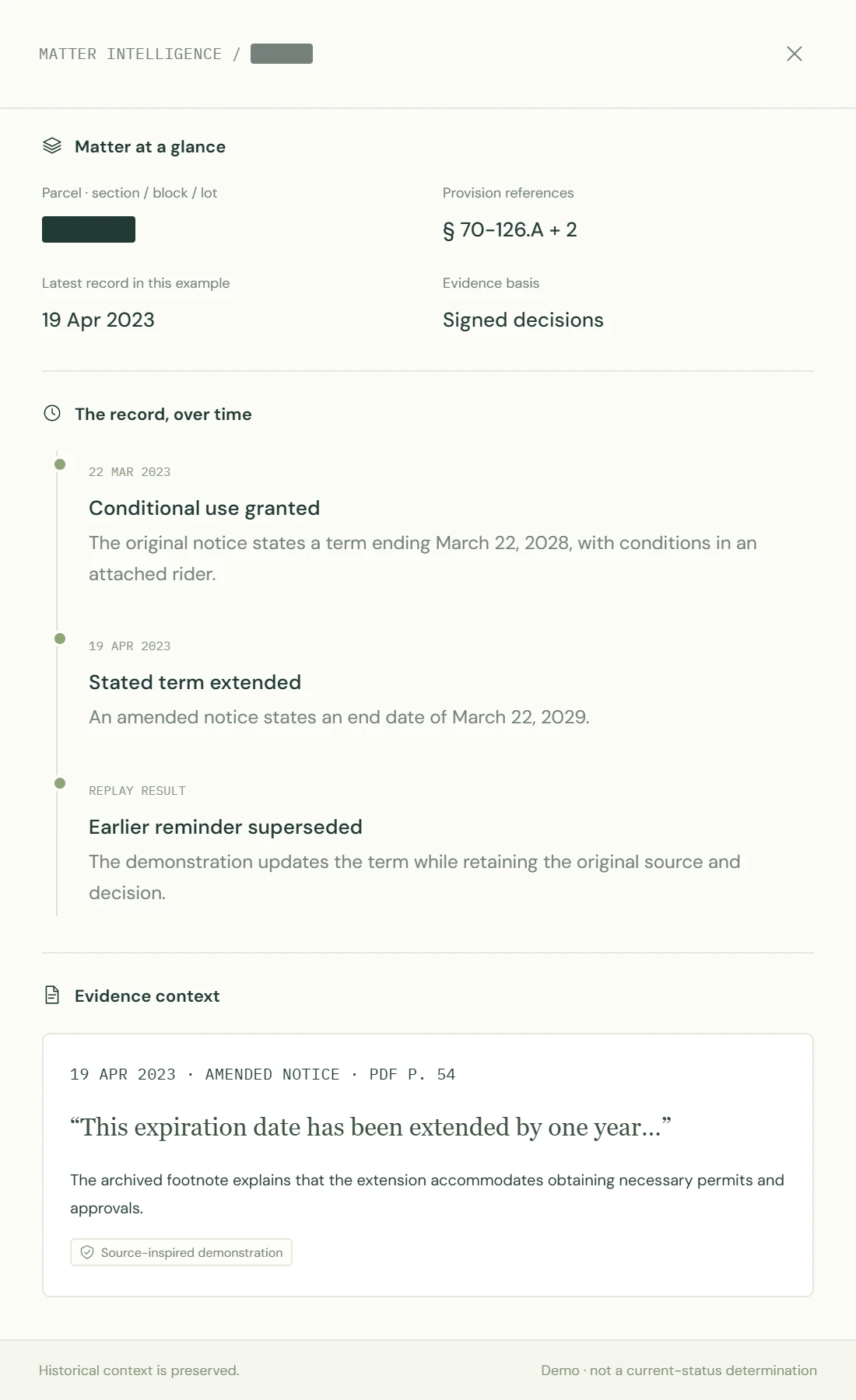
Towns record hours of public meetings that nobody can search. Local Historian transcribes them and answers plain questions with the exact moment and the person who said it. It also opens up oral-history interviews for researchers.
It began with the Seneca Falls Historical Society. I digitized the Society’s cassette collection, restored it, and published it with transcripts on a portal I built.
Shipped and market-tested. I pitched it to thousands of towns and libraries, and adoption so far is near zero. The tech works. The timing is the hard part, and I’d rather tell you that than hide it.
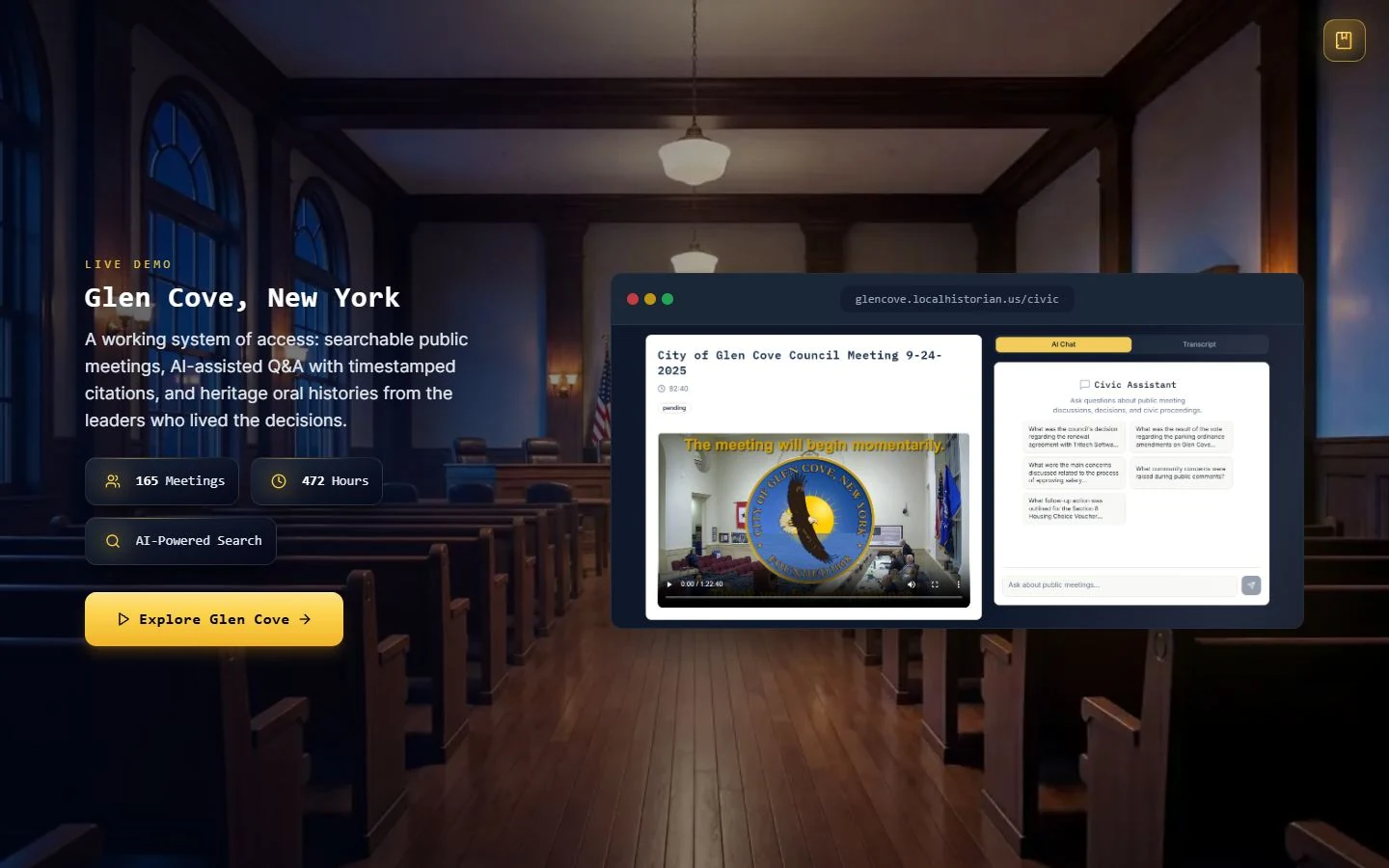
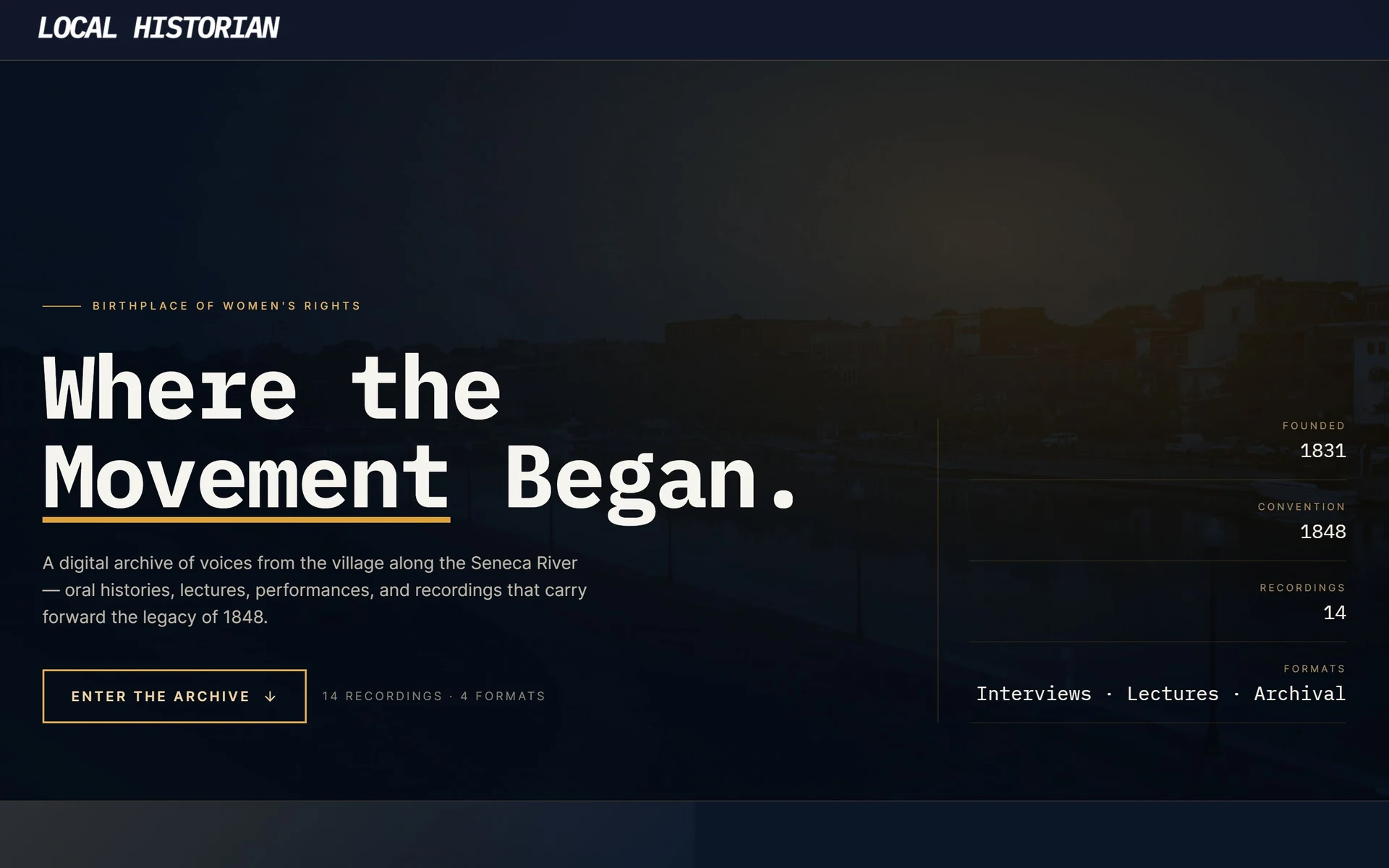

- From the site
Hosting is not access.
- From the site
We digitize, restore, transcribe, and connect your record — meetings, minutes, laws, histories — into one searchable public portal.
The tape sequence from the Local Historian film · generated imagery, stitched together and edited by me
Appendix 03.1Watch the film, with the site it was made for →
03.2 Athelas
Athelas.
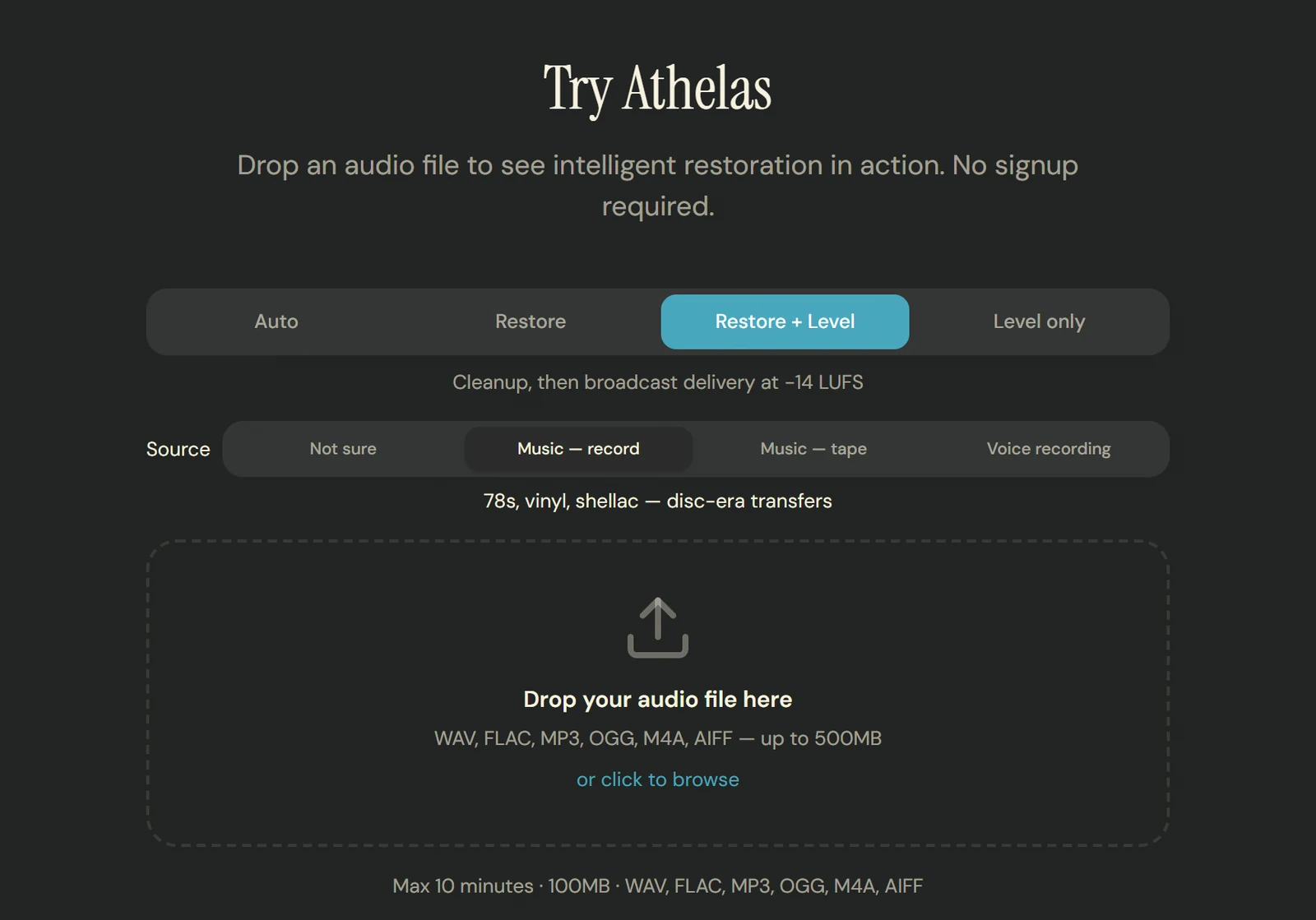
A restoration workbench for old recordings: 78s, worn records, cassette tape. It is unfinished, and it is mine.
Switch while it plays.
Raw transferAbove 8 kHz, on average −35 dB
It measures what is wrong with a recording first: clicks, crackle, hum, hiss, clipping, lost high end. Then it tries a few repair chains on a short excerpt and scores each one against doing nothing. It runs the winner on the whole file, checks its own result, and returns the original if nothing beat it.
Some of the repair is done by models I fine-tune on custom audio sets, each one built to train for a specific problem. It runs on my own machine and is not a public product.

03.3 Vairë
Vairë.
Vairë listens to every track in my collection, about 34,000 of them, in overlapping 30-second windows and writes a short description of how each passage sounds. I type a description and it jumps to the matching moment on the waveform.
Active prototype
Around the search.
03.3a
Cues and sample banks
Cue markers and regions on a zoomable waveform, each with its own notes and tags, gathered into sample banks.
03.3b
Stems
Stem separation on demand. All six stems are kept, for a mixer in the browser.
03.3c
Album splitter
Full-album recordings cut into tracks, from published track lengths or from the silences between them, and checked in an editor before anything is cut.
03.3d
Rights research
What is known about a recording’s identity, composition, master and contact, scored, with the year its U.S. copyright as a sound recording runs out.
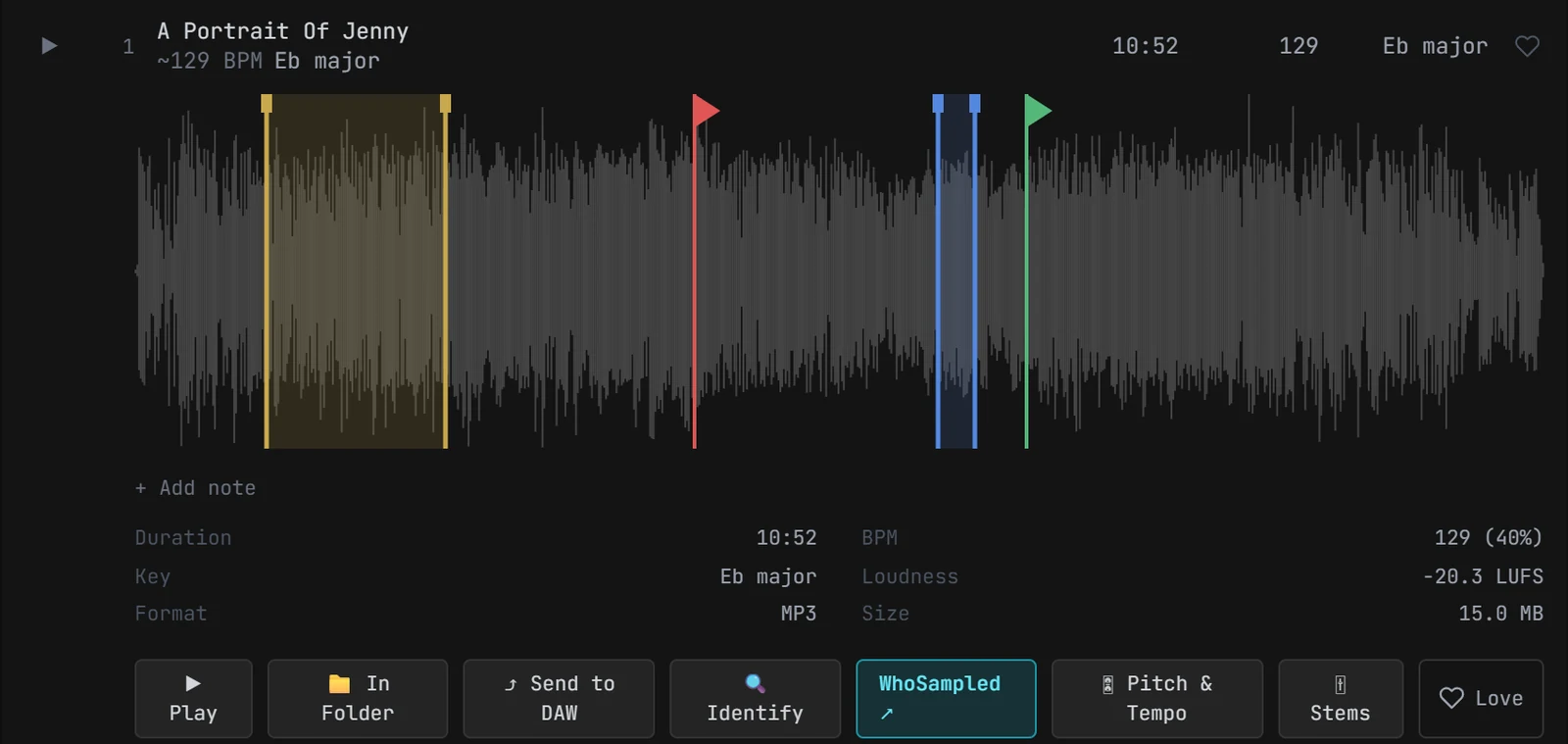
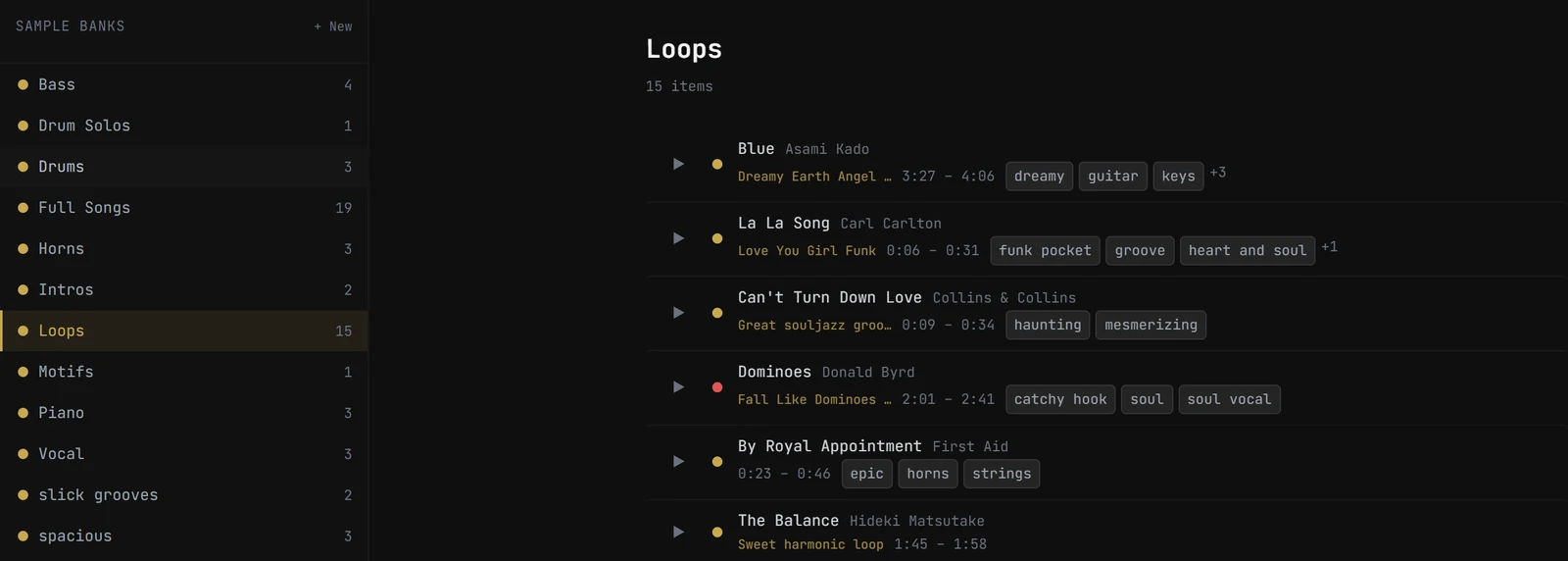
The prototype shipped as Sampler Brain, the name in the screenshots, and I never stopped adding features long enough to rename it. Vairë was the intended name, and the larger idea behind it was a rights marketplace for old recordings, called Revival. The collection is my own, so none of it plays here.
03.4 Clearance
Research platform
Clearance.
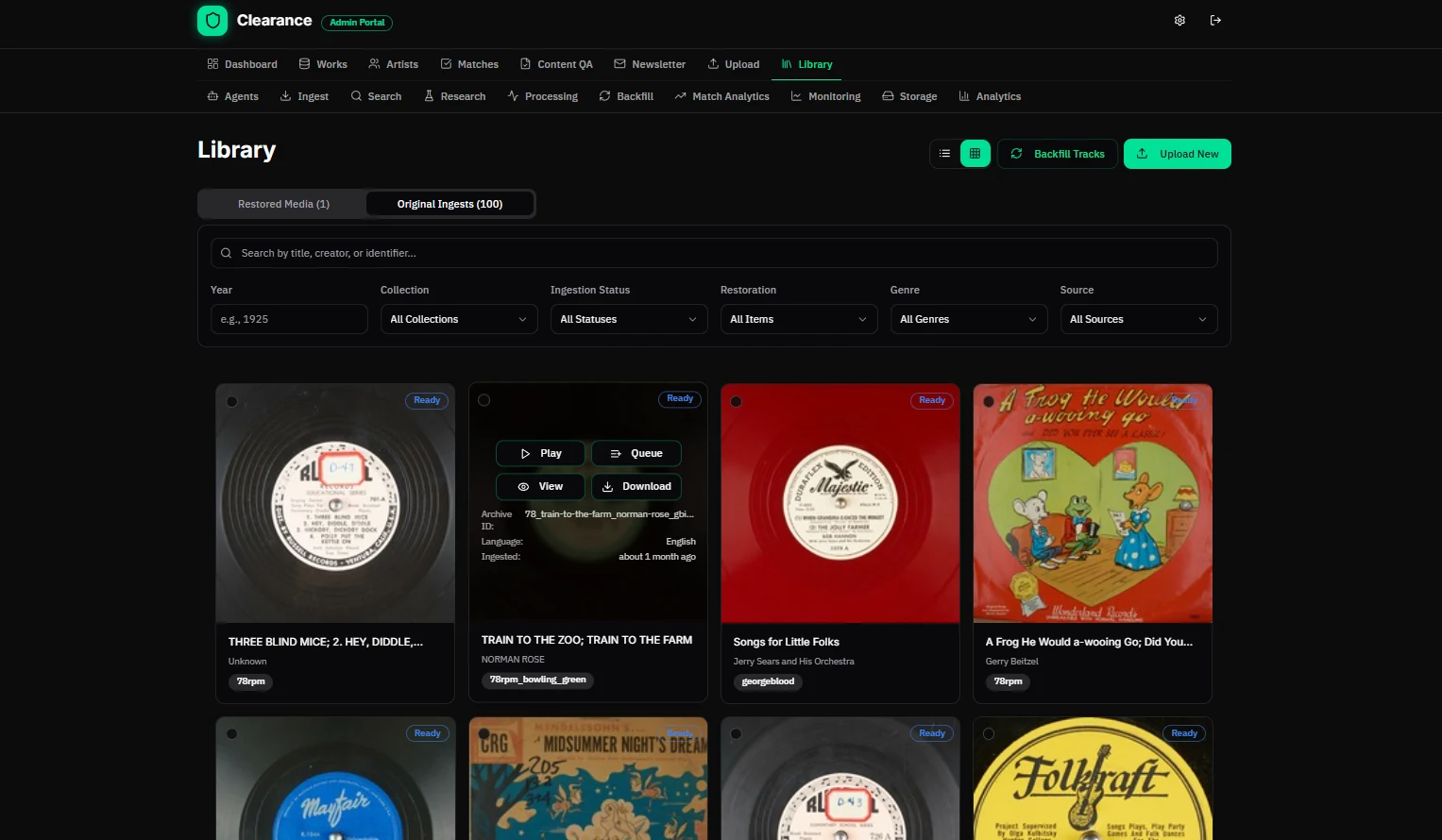
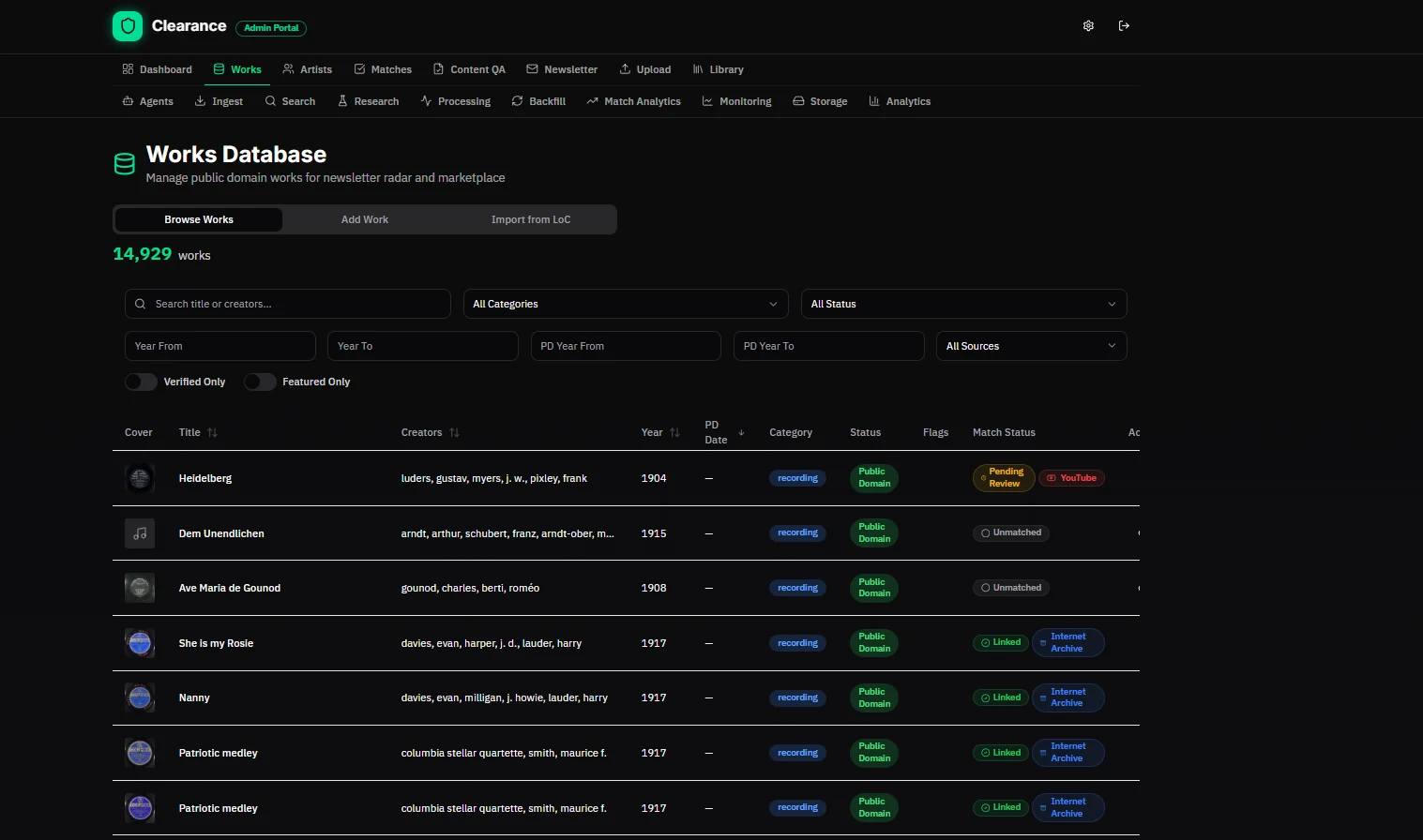
Pre-1930 recordings, researched for public-domain status.
Records made before 1930 often come with almost no reliable information. Clearance matches each one to what is known, researches its public-domain status and drafts notes about it. Anything uncertain waits for a person to review.
03.5 3L
Live prototype
3L.
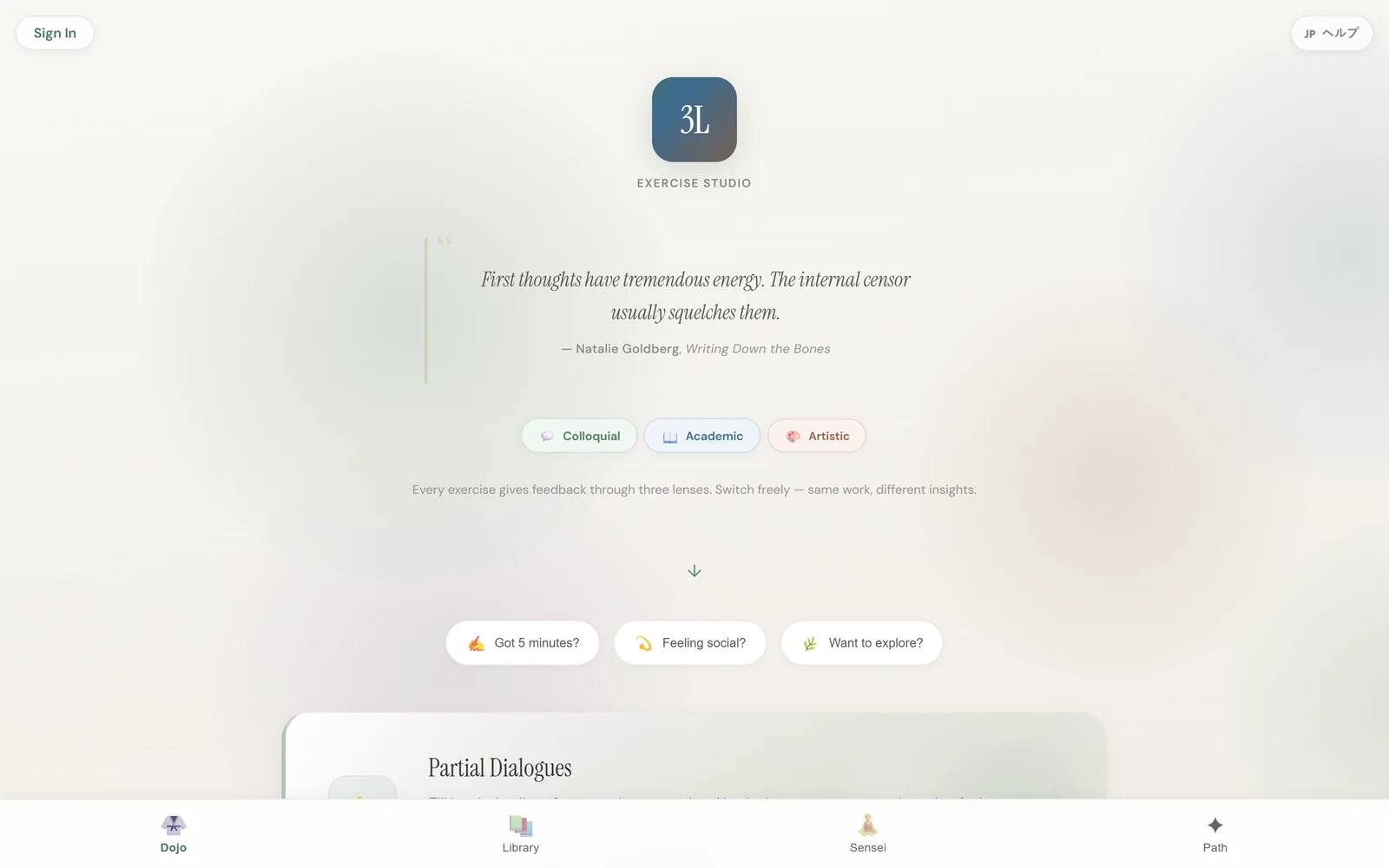
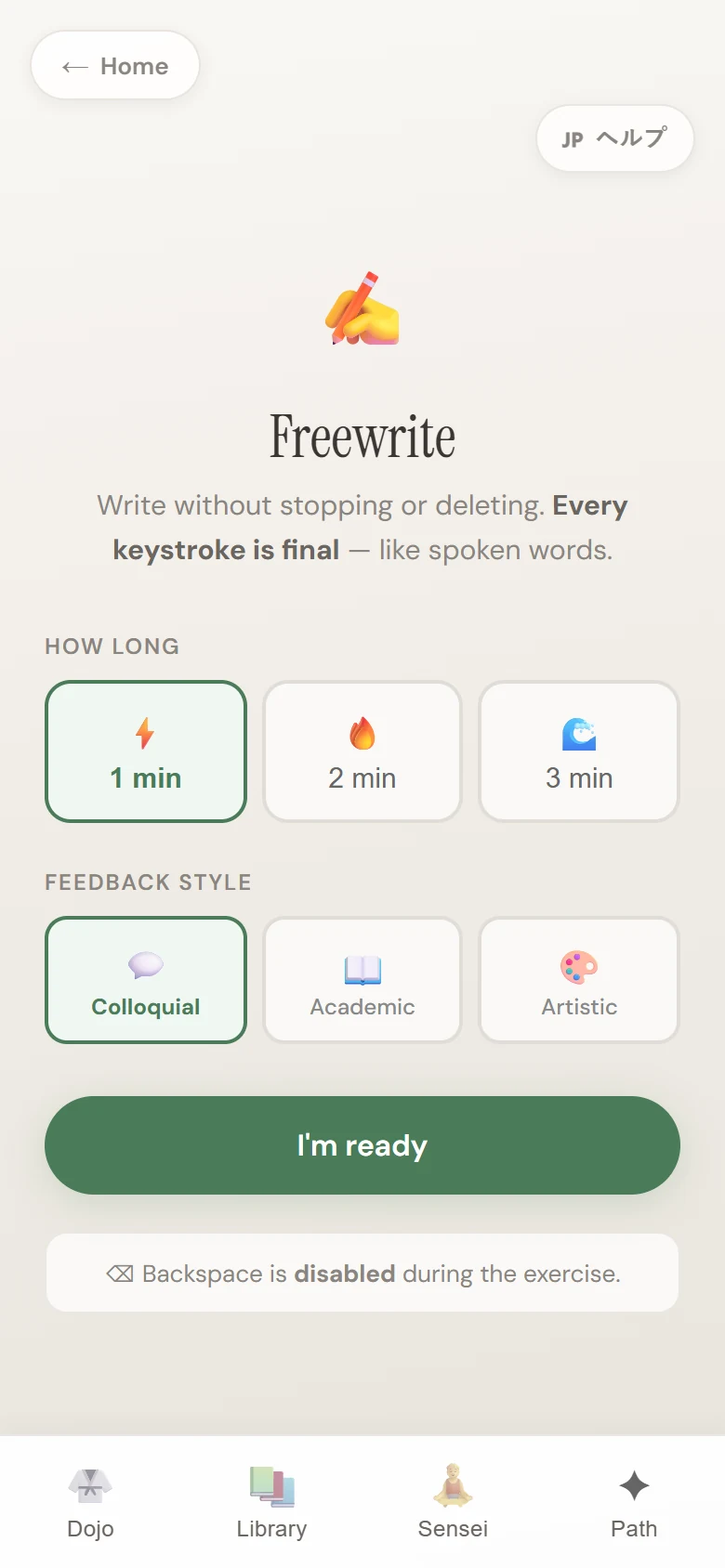
A language tutor, built in under a week.
3L turns a specific method for learning a second language into an AI tutor. The method is my friend Tony’s: he teaches English in Japan, and he built it out of 3L, a term from our childhood. The tutor runs exercises, role-plays conversations and records progress quietly instead of scoring it. It is a working prototype.
Beta link on request.
03.6 Offstage
Tabled
Offstage.
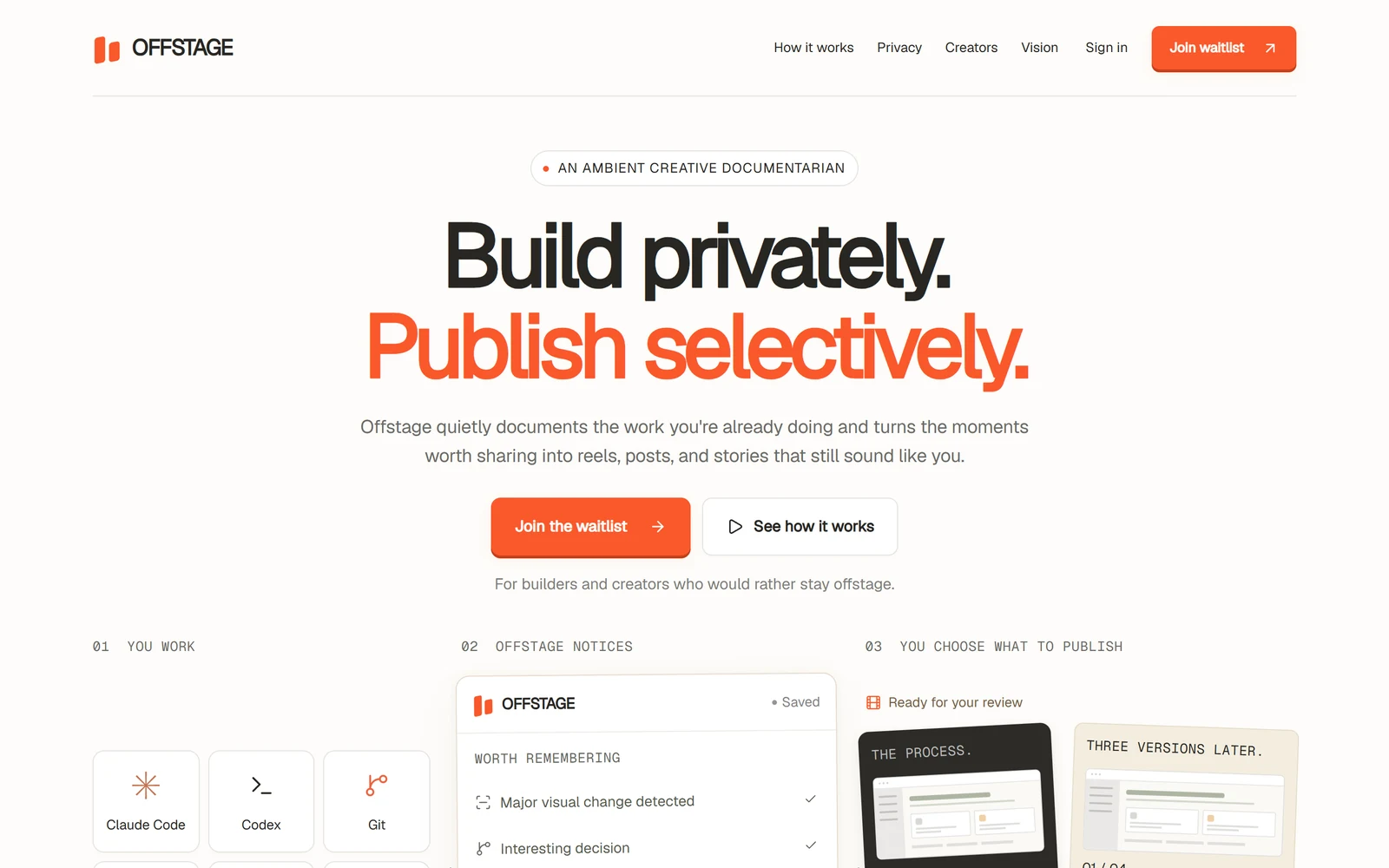
Content for people who don’t want to sell themselves: automate it, and show the work.
I built a local prototype. It imports a work session, links it to the git history, proposes stories with their sources, and renders a vertical video that has to be approved before it can be exported.
I set it aside because the monitoring it needs, several lanes at once, some passive and some active, could not yet be built at a cost I could carry. I intend to come back to it.
03.7 Client work
Client work.
- Blaine Harbor Music FestivalFestival website
- DéWarriorHolistic advisory platform
03.8 Contact
Contact
For lessons, sessions or projects, write to me through the contact form. I usually reply within a day.